In the field of philology and linguistics, gender has been worked on almost exclusively from a grammatical perspective, without taking into account that the relationships between the code or linguistic system and what the code represents are arbitrary.
The Guide of Philology and Linguistics to mainstreaming gender in university teaching offers proposals, examples of good practice, teaching resources and consulting tools that allow for reflection and questioning of rules and meanings that ignore, make invisible or belittle women.
At present, neither women’s art production nor feminist art history is part of most art history academic curriculum and study programmes. Likewise, the lack of critical analysis of the representation of women throughout the history of images leads to the repetition of stereotypes.
The Guide of History of Art to mainstreaming gender in university teaching offers proposals, examples of good practices, teaching resources and consulting tools that will allow the incorporation of the gender perspective in teaching in new generations, the knowledge transfer and research.
Traditional studies in the field of psychology have included samples with little representation of women, which has led to a skewed generalization of the results obtained to the whole population. In fact, this gender bias has been used over the years to justify the inferiority of women.
The Guide of Psychology to mainstreaming gender in university teaching offers proposals, examples of good practice, teaching resources and consulting tools that allow us to understand the social, cultural and political complexity of today's world.
Document que permet abordar l'eliminació de la violència de gènere i l'assetjament sexual, per raó de sexe i per orientació (o identitat de gènere) en l'àmbit universitari.
L'obra té com objectiu visibilitzar l'equitat entre homes i dones en tots aquells documents que es produeixen en la universitat. Està adreçada a estudiants, personal docent i investigador, i personal d'administració i serveis.
Criteris multilingües per a la redacció de textos igualitaris aplega un recull de recursos inclusius i visibilitzadors, així com exemples d’usos i recomanacions per a utilitzar les formes dobles (masculí i femení) en relació amb els tipus de documents institucionals més habituals en l’àmbit universitari en llengua catalana, castellana i anglesa. La guia també incorpora diversos annexos, com ara una relació de mots i expressions que poden servir d’alternativa per a l’ús del masculí com a genèric.
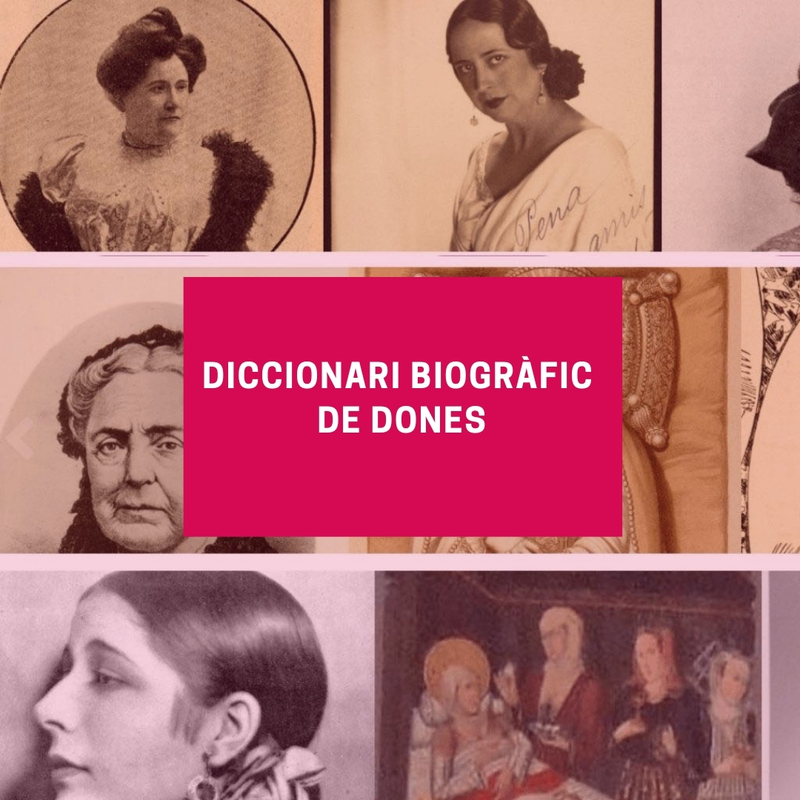
El Diccionari Biogràfic de Dones ofereix un extens recorregut al llarg de la història dels territoris de parla catalana entre els segles I i XXI a través de 655 biografies. L'objectiu de l'obra és posar de relleu la contribució que les dones han fet en la història dels territoris de parla catalana des de diferents camps de coneixement i àmbits d’actuació.
La Generalitat de Catalunya, el Consell de Mallorca i la Xarxa Vives d’Universitats van activar el diccionari en 2010. En la seua elaboració, a càrrec de la Xarxa Vives, han treballat investigadors i grups de recerca universitaris en estudis de les dones i de gènere.